DBeaver Essentials: Mastering Database Connections and Basic Queries
Published on October 26, 2023
DBeaver is a versatile and powerful database tool that allows developers and database administrators to connect to various types of databases. In this tutorial, we'll walk you through the process of establishing connections to popular databases like MySQL, PostgreSQL, and SQL Server, and writing your first basic queries.
First, ensure you have DBeaver installed. You can download the latest version from the official DBeaver website. Once installed, launch the application. To connect to a database, click on the "New Database Connection" icon or navigate to File > New > Database Connection. Choose your database type from the list of supported databases. You'll need to provide connection details such as hostname, port, database name, username, and password. For MySQL, these details are usually straightforward. For PostgreSQL, ensure the PostgreSQL server is running and configured to accept remote connections.
After successfully connecting, you can browse the database schema, tables, views, and other objects. To write a basic query, open a new SQL editor by clicking on the "New Editor" icon or navigating to File > New > SQL Editor. You can now write SQL queries to retrieve, insert, update, or delete data. For example, to retrieve all records from a table named "customers", you can write:
SELECT * FROM customers;
. Execute the query by clicking the "Execute SQL Script" button or pressing Ctrl+Enter. The results will be displayed in a grid below the editor.
DBeaver also supports advanced features like query auto-completion, syntax highlighting, and data export. Explore these features to enhance your database management workflow. This article provides a foundational understanding of DBeaver and its capabilities.
Read More
Unlocking Advanced DBeaver Features for Efficient Database Management
Published on October 19, 2023
Beyond basic database connections and queries, DBeaver offers a wealth of advanced features designed to streamline database management and enhance productivity. In this article, we explore some of these powerful features, including ER diagrams, data transfer, and schema synchronization.
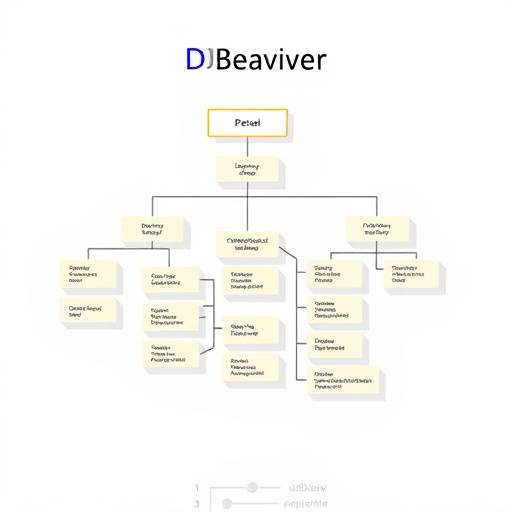
ER diagrams provide a visual representation of your database schema, making it easier to understand relationships between tables. To generate an ER diagram in DBeaver, right-click on a database connection in the Database Navigator and select "View Diagram." You can customize the diagram by adding or removing tables and adjusting the layout. Data transfer allows you to move data between different databases or file formats. DBeaver supports various data transfer methods, including exporting data to CSV, Excel, or SQL scripts, and importing data from these formats. To transfer data, right-click on a table and select "Export Data" or "Import Data."
Schema synchronization helps you keep your database schemas in sync across different environments. DBeaver can compare two database schemas and generate SQL scripts to update the target schema to match the source schema. To synchronize schemas, right-click on a database connection and select "Compare/Synchronize." You can then select the target database and compare the schemas. DBeaver will generate a script containing the necessary SQL statements to synchronize the schemas.
These advanced features can significantly improve your database management workflow and help you become more efficient. Experiment with these features and discover how they can benefit your specific use case.
Read More
DBeaver vs. Other Database Management Tools: A Comprehensive Comparison
Published on October 12, 2023
The world of database management tools is vast and varied, with options ranging from commercial offerings to open-source solutions. DBeaver stands out as a popular open-source choice, but how does it compare to other tools in the market? In this article, we'll compare DBeaver with popular alternatives like SQL Developer, pgAdmin, and TablePlus, considering factors like features, performance, and ease of use.
SQL Developer, Oracle's official IDE for working with Oracle databases, offers tight integration with Oracle's ecosystem. pgAdmin, designed specifically for PostgreSQL, provides a robust and feature-rich environment for PostgreSQL administration. TablePlus, a commercial tool, focuses on a clean and intuitive user interface, aiming for simplicity and ease of use. DBeaver, on the other hand, is known for its versatility, supporting a wide range of database systems and offering a comprehensive set of features.
In terms of features, DBeaver offers a rich set of capabilities, including SQL editing, data browsing, ER diagrams, data transfer, and schema synchronization. SQL Developer provides similar features but is primarily focused on Oracle databases. pgAdmin excels in PostgreSQL-specific features. TablePlus offers a subset of these features, emphasizing simplicity and user-friendliness. In terms of performance, all these tools are generally performant, but performance can vary depending on the size and complexity of the database. In terms of ease of use, TablePlus is often praised for its intuitive interface, while DBeaver and SQL Developer can have a steeper learning curve due to their more extensive feature sets.
Choosing the right database management tool depends on your specific needs and preferences. If you primarily work with Oracle databases, SQL Developer might be a good choice. If you're focused on PostgreSQL, pgAdmin is a strong contender. If you value simplicity and ease of use, TablePlus is worth considering. If you need a versatile tool that supports a wide range of databases and offers a comprehensive set of features, DBeaver is an excellent option.
Read More